Older Homes · 9 min read
What Makes Painting a Grosse Pointe Interior Different
Plaster, layered woodwork, radiators and tall ceilings change almost every decision in an older Michigan interior. Here is what a careful job looks like, surface by surface.
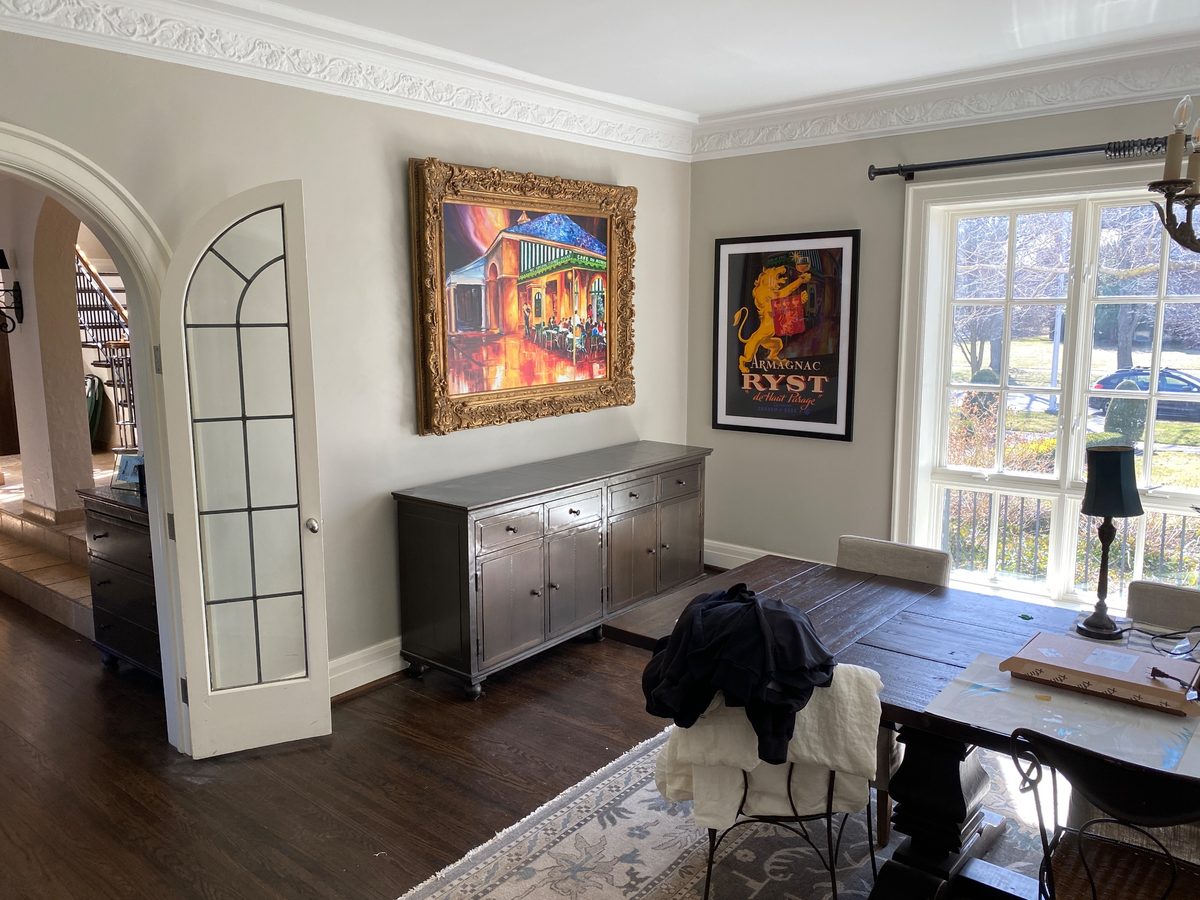
Painting a Grosse Pointe-era interior differs from painting a newer house because the surfaces are different: hard plaster walls with gentle waves, woodwork wearing decades of paint, radiators that get hot, tall ceilings and original hardwood floors. Each one changes the prep, the primer or the method, which is why older rooms reward patience.
Key takeaways
- Older Grosse Pointe interiors are painted differently because of plaster walls, decades of paint on the woodwork, radiators and tall ceilings.
- Most of the finish is decided before the first coat: protection, cleaning, scraping, sanding, filling, caulking and priming.
- Hairline plaster cracks, glossy old trim and heated metal each need their own treatment, not one-size-fits-all paint.
- A plain-English written scope and a walkthrough at the end keep a careful job honest.
Sherwin-Williams colors in this guide
Jump to a section
- What makes an older Grosse Pointe interior different to paint?
- How do you paint plaster walls properly?
- What about the original woodwork and trim?
- Are radiators, built-ins and fireplaces painted differently?
- How do arches, curved plaster and tall ceilings change the work?
- How are floors, rugs and furniture protected?
- How do you choose colors for older rooms?
- What should a careful interior job include, and when is it worth hiring out?
- Questions
The 1920s through the 1940s were a major building period in the Grosse Pointes and across Metro Detroit, with post-war Colonials, Capes and ranches following. Many Colonial Revival, Tudor Revival and French-style houses from that era share plaster walls, wood trim with real profile and, often, original hardwood floors. Cracks, loose sections and old patches get repaired before any paint goes on; that is the work of plaster repair in Grosse Pointe homes.
What makes an older Grosse Pointe interior different to paint?
Four things: the walls, the woodwork, the heat and the height. Plaster behaves differently from drywall. Trim has often been repainted many times, sometimes with oil-based enamel. Radiators and baseboard heat put hot metal against painted surfaces. And ceilings often run taller than in many newer houses, which changes how the work is reached and how light rakes across the walls.
Together they mean a standard “two coats and done” approach tends to leave telltale marks: cracks reopening, trim that feels tacky for weeks, paint that yellows over a radiator or a ceiling line that wanders. A careful painter plans around each surface instead.
Features vary from house to house, but the main eras compare like this.
| House era | Typical interior features | What to plan for |
|---|---|---|
| 1920s Tudor Revival | Textured plaster, arched openings, dark woodwork, leaded windows | Brush work at arches; decide early on dark wood |
| 1920s Colonial Revival and post-war Colonials | Symmetrical halls, paneled doors, crown molding, divided-light windows | One trim color and sheen throughout; careful sanding and caulking |
| Post-war Capes and ranches | Simpler trim, picture windows, open plans, paneling, textured ceilings | Wet edge on long walls; test textured ceilings for asbestos first |
How do you paint plaster walls properly?
Start by learning what you have. Plaster is harder and heavier than drywall, cooler to the touch and solid-sounding when tapped, and it often has soft waves rather than perfectly flat planes. The National Park Service’s Preservation Brief 21 on repairing historic flat plaster notes that plaster was the wall surface chosen for nearly all buildings until the 1930s or 40s, and it recommends keeping and repairing historic plaster if at all possible. Our guide to telling plaster from drywall shows how to check. Hairline cracks are normal in old plaster; loose or hollow areas are different and need fastening first, as covered in loose plaster repair.
Once the wall is sound, the sequence matters:
- Clean first. Decades of kitchen grease, cigarette film and dust stop new paint from bonding.
- Fill and feather. Cracks and dings are filled, sanded smooth and checked in raking light, with a lamp held low along the wall.
- Prime the patches. Unprimed patches “flash,” showing up as dull spots in the finished wall.
- Keep the sheen low. Flat or matte hides waves; a glossier sheen on old plaster shows every one.
For the full approach, see painting plaster walls. Cracks that return every winter have their own causes, covered in hairline cracks that keep coming back. Michigan’s swing from humid Lake St. Clair summers to cold, dry, heated winters moves old plaster and wood a little every year, so a flexible, paintable caulk at corners and trim lines helps.
What about the original woodwork and trim?
Original trim is often solid wood with real profile, and it usually carries the most layers of old paint in the house. Those layers need to be cleaned and scuffed before anything new goes on, and where the surface is slick or oil-based, a bonding primer is typically the safer choice. Check the label for what the primer is designed to stick to.
The details that separate a smooth trim job from a rough one are all small and checkable:
- Sanding the edges of old paint so chips do not show through the new coat.
- Caulking the joint where trim meets the wall, using a paintable caulk, and caulking the top of a baseboard rather than the gap at the floor.
- Sanding lightly between coats for a smooth surface.
- Keeping one sheen across all the woodwork in a room, typically satin or semi-gloss.
Our guide to painting interior trim and doors goes through these steps in order. Elaborate trim such as paneling and crown molding takes more patience, because every profile needs its own brush work and caulk line.
Are radiators, built-ins and fireplaces painted differently?
Yes, because each has a condition ordinary wall paint does not face. Radiators need to be completely cool, cleaned and de-rusted, then coated in thin layers with a paint made for heated metal; the label should say so. Valves and bleeders are never painted shut. Our guide to painting radiators and baseboard heat has the details, including why a faint odor the first time it heats is normal.
Fireplace surrounds follow similar logic. A wood mantel paints like trim, but nothing goes inside the firebox, and heat-tolerant paint (check the label) is the choice at the opening itself. Soot and smoke stains need a stain-blocking primer first. We cover this in painting fireplace mantels and surrounds. Built-ins and china cabinets are a third case, with shelves to remove, label and prime; see painting built-in bookcases and shelving.
Painting rooms like this in Grosse Pointe?
Tell us about your home and we’ll be in touch to talk it through.
How do arches, curved plaster and tall ceilings change the work?
Arched doorways and curved plaster are mostly brush work. A roller cannot follow a tight curve, so the painter cuts in slowly and caulks where trim meets the plaster. We explain how in painting arched doorways and curved plaster.
Tall ceilings and stair halls introduce a different issue: access. Safe, stable setups matter, and nobody should improvise with a ladder on a stair. Our guide to painting stair halls and high ceilings covers the planning. If a ceiling is textured, the asbestos caution in the painter’s note above applies before anything is scraped or sanded.
How are floors, rugs and furniture protected?
Original hardwood floors, area rugs, furniture and plants should be covered or moved before anything is opened. Good protection means more than a thin sheet: floors covered fully along the walls where drips land, furniture draped or moved to the room’s center, and fragile items out of the way.
On a Guiffre’s Painting Co. project, floors, furniture and plants are protected. Surfaces are cleaned, loose paint is scraped, edges are sanded, holes and cracks are filled, joints are caulked and bare or stained areas are primed. If you are preparing for painters, move small valuables and breakables yourself, and clear a path to each room so nothing is carried through a wet doorway.
Seasons matter too. Humid summers slow drying, and plaster can take on moisture, while cold, dry, heated winters speed drying and can shrink wood trim slightly. A good painter keeps rooms at the temperature the label calls for and does not rush recoats just because a room feels dry.
Moisture comes first. The National Park Service’s Preservation Brief 28 on painting historic interiors names water as a prime cause of interior paint failure and says moisture from roofs, gutters, plumbing or heating elements should be corrected before repainting.
How do you choose colors for older rooms?
Older houses have quirks of light: divided-light or leaded windows, porches and mature trees that shade a room, and rooms that face every direction. A color that looks soft on a chip can turn gray in a north-facing room and glow in a south-facing one. Screens and printed chips mislead, so test a large sample on the actual wall, in that room’s light, in the morning, at midday and in the evening with the lamps on.
Agreeable Gray SW 7029 (a light warm gray), Accessible Beige SW 7036 (a warm greige that leans more beige) and Shoji White SW 7042 (a soft off-white with a greige cast) are neutrals that sit comfortably beside traditional woodwork, and Alabaster SW 7008 is a warm, creamy off-white. For deeper rooms, Pewter Green SW 6208 or Naval SW 6244 can suit a dining room or library. Our guide to interior paint colors for older homes compares them, and a period palette is worth considering if you want the rooms to feel true to the house.
What should a careful interior job include, and when is it worth hiring out?
Whatever painter you choose, a careful job has recognizable stages. Surfaces are protected, cleaned and repaired; bare or patched areas are primed; paint goes on in even coats rather than one heavy one; and the work ends with a walkthrough and touch-ups. The scope should be written in plain English so nobody argues later about whether the trim or closets were included.
At Guiffre’s, Bob and Bobby work together on every project. Our process page describes the steps, and the final walkthrough and touch-up list shows what to look for at the end.
Order matters too. A common sequence in an older room is ceiling first, then walls, then trim, so drips land on surfaces that are not yet finished. Doors and windows are painted with hardware removed or masked, and the room is checked in raking light before anything is called done. Rooms that share an arch or a wide opening are usually treated as one decision about color and sheen, so the transition looks deliberate.
When is it worth hiring out? If the project is one flat wall in a newer room, DIY is reasonable. If it involves plaster repair, glossy old trim, radiators or stair halls, the time and effort add up. Ask how plaster, old trim and radiators will be handled before you agree to anything, and ask for the answers in the written scope.
In a house built before 1978, work that disturbs old paint is also a lead question, so ask any painter you hire how they handle it and get the answer in writing.
If you are planning interior work, the page on interior painting in Grosse Pointe describes how Guiffre’s approaches it.
Painting in a particular Pointe? There is a page for each: Grosse Pointe Park, the City of Grosse Pointe, Grosse Pointe Farms, Grosse Pointe Woods and Grosse Pointe Shores.
Questions
Why is painting an older Grosse Pointe home harder than a newer house?
The surfaces need more care: plaster walls with waves and hairline cracks, woodwork with many layers of old paint, hot radiators and tall ceilings. Each calls for particular prep, primer or technique. Skipping those steps is a common reason for cracks reopening, peeling trim and visible patches.
Should I prime before painting plaster walls?
Patched and repaired areas should be primed so they do not flash, or show as dull spots. Bare plaster typically gets a primer made for it, and glossy or stained surfaces need a bonding or stain-blocking primer. Check the label on any product and follow its directions.
Can I paint over old lead paint myself?
Possibly, if the old paint is intact and you do not scrape or sand it, but find out whether lead is present first. Homes built before 1978 may contain lead paint, and scraping or sanding can create hazardous dust. If you hire someone for paid work that generally disturbs more than 6 square feet of painted surface per room inside such a home, the EPA’s RRP rule calls for a certified firm using lead-safe work practices.
About the author
Guiffre's Painting Co.
Family-owned interior painting and plaster repair serving Grosse Pointe and Metro Detroit. Owner Bob Guiffre has been painting for more than 37 years — more than 1,800 homes — and his son, Bobby, works beside him on every project. We paint with Sherwin-Williams. Estimates are free. Insured: $1,000,000 general liability. Call (586) 722-3277.