Older Homes · 7 min read
Painting Colonial Revival Interiors: Symmetry, Paneled Doors and Consistent Trim
Colonial Revival rooms are built on repetition, so a small inconsistency in color or sheen shows up everywhere the eye travels.
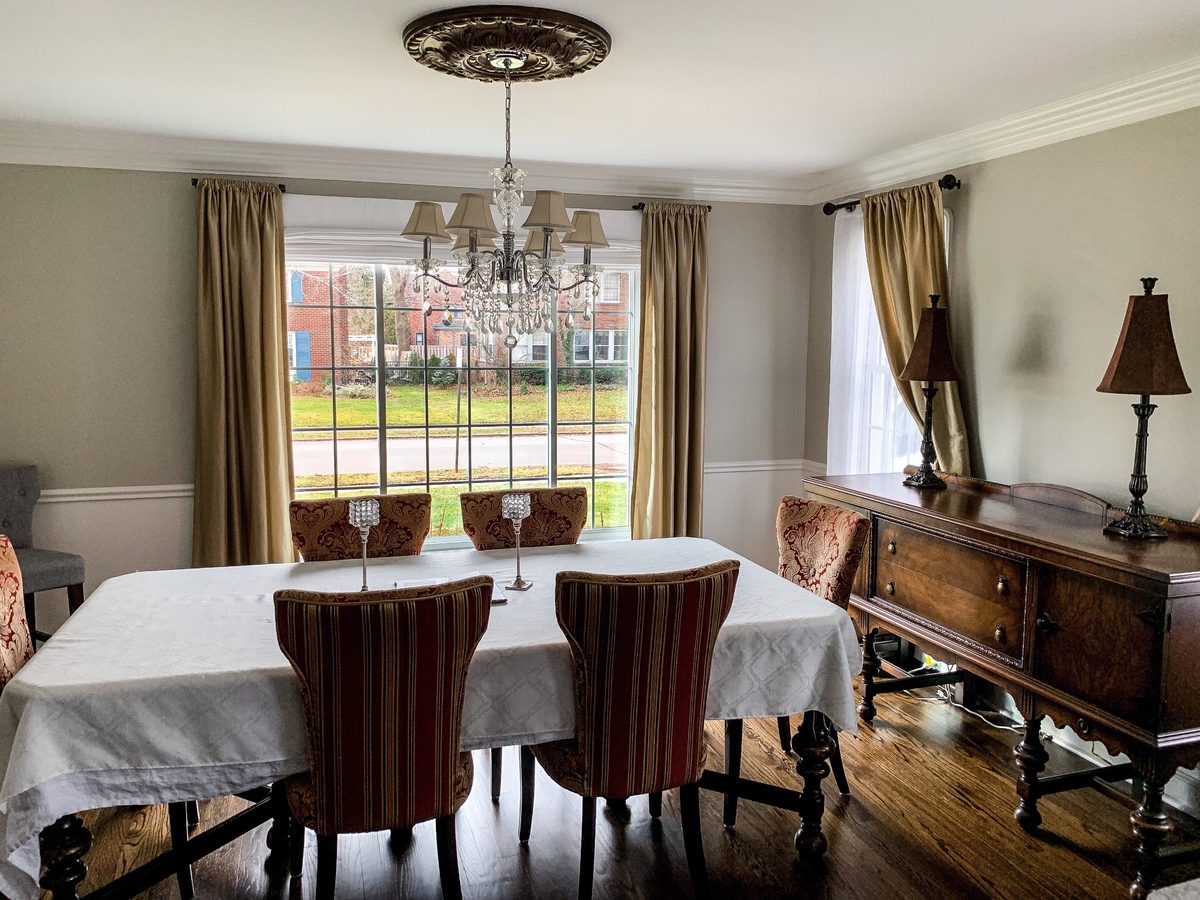
Colonial Revival interiors depend on symmetry and repeated trim, so the key to painting them well is consistency. Use one trim color and one sheen throughout, paint paneled doors in the proper order, prepare crown molding and wainscoting carefully, and work on stairs in stages. Small differences in sheen or color stand out in a symmetrical room.
Key takeaways
- Symmetry means repeated trim, so keep one color and one sheen on every door, casing and baseboard.
- Paneled doors are painted panels first, then rails and stiles, with hardware removed and edges sealed.
- Crown molding, wainscoting and mantels carry layers of old paint, so cleaning, sanding and caulking decide how crisp they look.
- On a staircase, work top down and leave any treads for last, painting every other one at a time and keeping people and pets off the wet ones.
Sherwin-Williams colors in this guide
Jump to a section
- What defines a Colonial Revival interior?
- Why does trim sheen and color consistency matter so much?
- How do you paint paneled doors?
- What about crown molding, wainscoting and mantels?
- How do you paint double-hung windows and their casings?
- How are staircases and halls painted?
- What do original plaster walls add to the job?
- How do you keep the whole house consistent?
- Questions
What defines a Colonial Revival interior?
Colonial Revival was very popular in the 1920s, and post-war center-entrance Colonials followed it across Grosse Pointe and Metro Detroit. Inside, many share a recognizable set of features.
- A center hall with rooms arranged symmetrically on either side
- Paneled interior doors, often six-panel, with matching casings
- Crown molding or cornices, and sometimes a picture rail or chair rail
- Wainscoting or paneling in dining rooms and halls
- A formal staircase with a turned or square newel post and spindles
- Fireplaces with mantels and surrounds
- Plaster walls and ceilings in many original examples
A careful painter plans trim as a system, not room by room.
One caution applies before any sanding starts. In a house built before 1978, painted trim, doors, radiators and stair parts may carry lead paint, and older plasters and joint compounds may contain asbestos. Scraping, scoring, sanding, scuff-sanding and wire-brushing can release that dust, so have suspect surfaces tested first. If asbestos turns up, leave the material undisturbed and talk to a qualified asbestos professional about whether to leave it, seal (encapsulate) it or remove it; do not scrape, sand, roll or spray it yourself. For lead dust, wet-wipe surfaces and use a vacuum with a HEPA filter rather than an ordinary household vacuum or dry sweeping. The EPA’s Renovation, Repair and Painting (RRP) rule requires certified firms and lead-safe work practices for paid work that generally disturbs more than 6 square feet of painted surface per room inside a pre-1978 home. Cracks above openings and along ceiling lines are common in older plaster; repairing them properly comes before painting.
Why does trim sheen and color consistency matter so much?
Trim in a Colonial Revival home is long and visible. Baseboards, casings, door panels and rails line up down a hall, and light skims across them from windows. Two different sheens, or even two batches mixed separately, can read as a stripe.
- Choose one trim color for the whole floor and test it beside the wall colors in each room’s light.
- Use one sheen on all trim. Satin or semi-gloss is typical; higher sheen is more washable but shows every flaw. See our paint sheen guide.
- Keep sheen consistent across a single wall or door too. Touching up a gloss trim with a flatter paint leaves a dull spot.
- Combine enough paint to finish a whole run of trim from one batch, and keep a labeled can for touch-ups.
White trim comes in several characters. Sherwin-Williams options include Extra White SW 7006, a crisp white that leans slightly cool, Pure White SW 7005, a soft clean white with a touch of warmth, and Alabaster SW 7008, a warm creamy off-white. Screens and chips mislead, so test a large sample on the trim itself. Our guide to Sherwin-Williams whites for interior walls and trim compares them.
How do you paint paneled doors?
A six-panel door has a logical order, and following it avoids drips and lap marks in the recesses.
- Remove the hardware and label it, or mask it carefully if removal is not practical.
- Clean the door, fill any dings and let the filler dry, then scuff-sand the old finish and the filled spots, following the precautions above. Use a bonding primer if the existing paint is glossy or oil-based. Read the label.
- Paint the recessed panels first, brushing out the paint where the molding meets the panel.
- Paint the vertical center pieces between the panels (the muntins) next, then the horizontal rails, then the outer vertical stiles last, working with the grain.
- Seal the top and bottom edges, since bare wood edges absorb moisture and wood doors swell in humid Michigan summers.
- Let the door cure before closing it tightly, so it does not stick to the frame.
In raking light, look for runs in the panel corners and for brush marks across the rails. Our guide to painting interior doors goes further on hung versus flat doors and edge sealing.
What about crown molding, wainscoting and mantels?
These are the details that carry many layers of old paint. The profiles fill up, the corners soften, and the joints open over decades.
- Crown molding. Dust, clean, sand any ridges and caulk the joint at the wall and ceiling with paintable caulk. Work with safe access at the ceiling line. See painting crown molding and ornamental plaster.
- Wainscoting. The grooves and the cap rail collect dust and grime. Clean thoroughly (switch the power off at the breaker before washing near outlets, switches or fixtures), caulk the top edge of the cap rail where it meets the wall, and use a small brush for the grooves.
- Mantels. Paint them like trim. Never paint inside the firebox. Near the opening, use a heat-tolerant paint according to the label, and use a stain-blocking primer over soot or smoke. See painting fireplace mantels and surrounds.
The National Park Service’s Preservation Brief 28 on painting historic interiors advises hand scraping on historic surfaces and hand sanding to feather the edges of firmly adhered paint, since mechanical sanders usually leave visible traces; the lead precautions above apply.
The caulk rule is simple: caulk the top of baseboards and the edges of casings, but leave the gap at the floor alone, since hardwood floors need room to expand and contract.
Painting rooms like this in Grosse Pointe?
Tell us about your home and we’ll be in touch to talk it through.
How do you paint double-hung windows and their casings?
Divided-light double-hung windows are common in a Colonial Revival house, and the classic mistake is painting the sash shut.
- Leave the sash slightly open while the paint dries, and move it gently once the film has skinned over.
- Once the paint is dry to the touch, run a utility knife lightly along the seam between sash and stop to break the film cleanly.
- Keep paint off sash cords, chains, pulleys, weatherstripping and glass.
- Give the sill and lower casing extra care, since cold-weather condensation hits them hardest and a durable satin or semi-gloss holds up better.
How are staircases and halls painted?
The staircase is the centerpiece of the hall, and people walk on it every day.
- Work from the top down: ceiling and walls above the stair first, then the newel post, spindles and handrail, then the stringer and skirt, with any treads last.
- Treads are a separate decision, so ask whether they are in the written scope. If they are painted, doing every other one at a time keeps a route open, but you step over wet treads, which is a slip and trip risk, so mark them clearly and keep people and pets off them. Use a paint made for floors or a porch-grade enamel over a scuff-sanded surface, and check the label for nonslip guidance, since a glossy tread is slippery.
- Spindles mean many cuts, so clean and sand them before painting and use a small brush to avoid drips.
- Painting in stairwells needs stable, safe access. Do not try to reach tall hall walls from a ladder set on a stair. Our stair halls and high ceilings guide covers access and sequence, and painting stair railings, spindles and treads covers the details.
Center halls often have the least natural light, so color there can read darker than in sunlit front rooms. Test large samples in the hall at different times of day, lights on and off.
What do original plaster walls add to the job?
Many original Colonial Revival rooms in Grosse Pointe have plaster walls and ceilings, which add a few jobs before any color goes on. Fine cracks are usually filled, loose areas are fastened or repaired, and the surface is primed where it is bare or patched. The National Park Service’s Preservation Brief 21 on repairing historic flat plaster explains that plaster loosens when it loses its key, its bond with the lath, and recommends keeping and repairing historic plaster if at all possible. Gentle waves are part of plaster’s character, so a flat or eggshell finish tends to look better than a glossy one.
Where walls meet tall baseboards and chair rails, the caulk line is what makes the trim look built-in rather than stuck on. A thin, smooth bead along the top edge of the baseboard, with nothing left to sand, is a good sign. Check casings for gaps in raking light, since a visible gap becomes a shadow line afterward.
Many of these houses have radiators. Clean and de-rust them (see the dust precautions above), paint only when completely cool, use a paint made for heated metal (check the label), and never paint over valves or bleeders.
How do you keep the whole house consistent?
With a plain-English written scope that names the rooms, surfaces, colors and sheens before any paint goes on. When it is done right:
- In side light from the end of the hall, every door, casing and baseboard shows the same sheen.
- Panel corners are free of runs and rails are free of brush marks.
- Caulk lines along baseboard tops and crown molding are smooth, with no gaps or smears.
- Spindles are free of drips, and the newel post matches the handrail.
- Windows open and close freely, with no paint on cords, glass or weatherstripping.
- Hardware is back on straight, and any painted treads are dry and not tacky. Runners and furniture wait until the paint has had time to cure, which takes weeks.
Guiffre’s Painting Co. protects floors, furniture and plants, cleans surfaces, scrapes loose paint, sands edges, fills holes and cracks, caulks joints, primes bare or stained areas and paints with Sherwin-Williams in even coats. Bob and Bobby are on every project, and a final walkthrough with touch-ups checks the result, as described on our process page. For the service overview, see interior painting.
Questions
What sheen should I use on Colonial Revival trim?
Satin or semi-gloss is typical for trim and doors, because it resists scuffs and cleans easily. Choose one sheen and use it everywhere on the trim, since mixed sheens look patchy in long runs. Higher sheen shows more flaws, so prep matters more.
In what order do you paint a paneled door?
Paint the recessed panels first, then the vertical muntins, then the horizontal rails, and the outer vertical stiles last. Remove hardware, seal the top and bottom edges, and let the door cure before closing it tightly so it does not stick.
Can I stay in the house while the stairs are painted?
It depends on the scope and the plan, so ask before the work starts. Painting every other tread keeps a route open, but you would step over wet treads, which is a slip and trip risk, so mark them clearly and keep children and pets away. If you can avoid the stairs until the treads are dry, that is safer, and go easy on them until the paint has had time to cure.
About the author
Guiffre's Painting Co.
Family-owned interior painting and plaster repair serving Grosse Pointe and Metro Detroit. Owner Bob Guiffre has been painting for more than 37 years — more than 1,800 homes — and his son, Bobby, works beside him on every project. We paint with Sherwin-Williams. Estimates are free. Insured: $1,000,000 general liability. Call (586) 722-3277.