Interior · 7 min read
How to Paint Stair Railings, Spindles, Newel Posts and Treads
Stairs combine a lot of fiddly woodwork with a surface people walk on daily. The order of work and a few safety choices decide whether the result looks good and lasts.
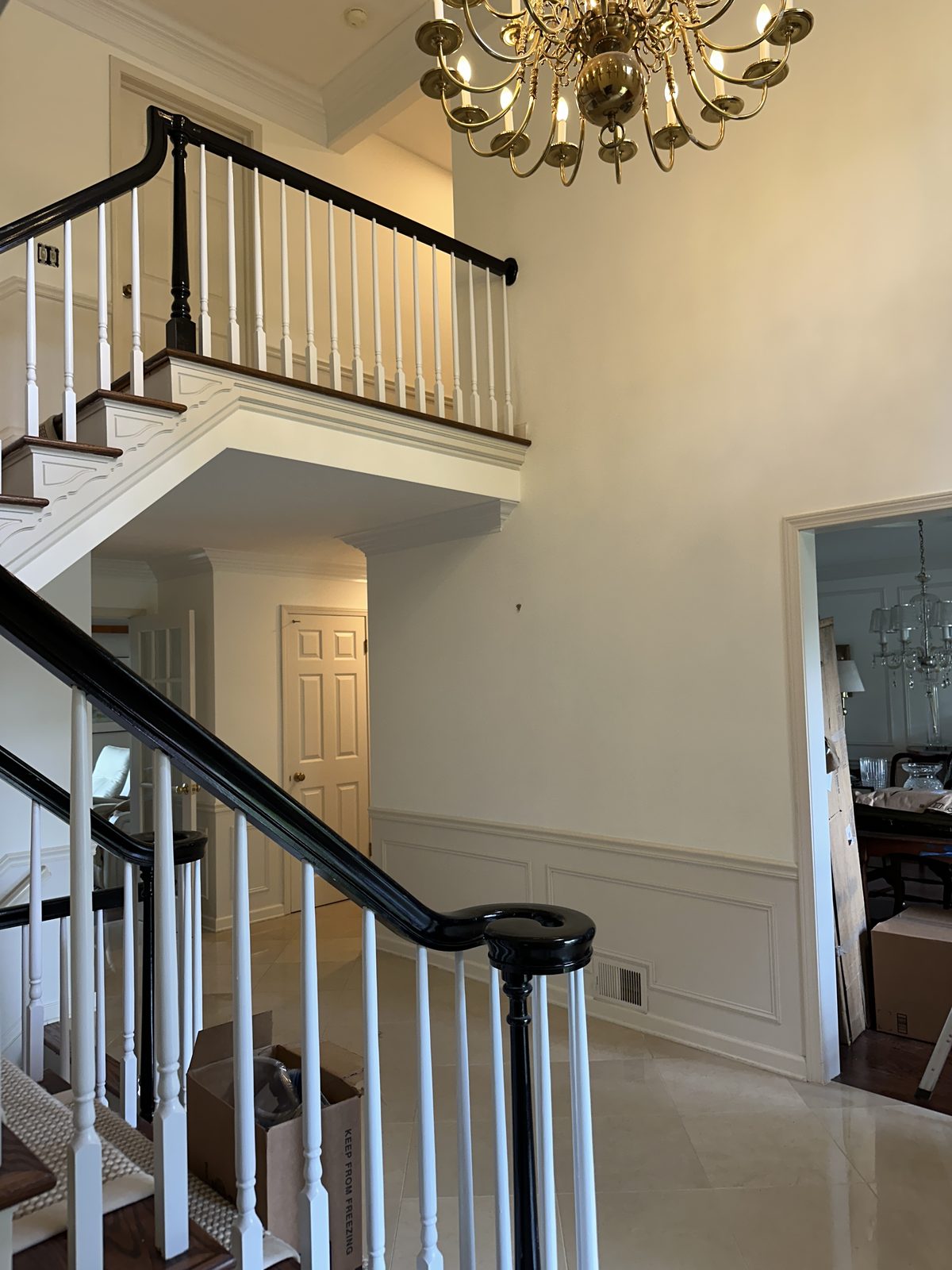
To paint a stair railing, start with the newel post, then do the spindles and handrail, then the skirt boards and risers, and leave the treads for last. Clean and sand everything, prime glossy surfaces with a bonding primer, and use durable enamel. Close the stairs while the rail is wet, and let treads harden before heavy use.
Key takeaways
- Start with the newel post, then the spindles and handrail, then the skirt boards and risers, and paint the treads last so drips never land on finished work.
- Clean and sand everything, and prime with a bonding primer where the old finish is glossy, because hands and feet wear stair finishes harder than any wall.
- Close the stairs while the rail is wet, paint treads in stages only when the rail is dry and everyone can manage a double step, and consider a floor-grade or nonslip finish.
- Let the paint harden before heavy use, and never work on stairs in a way that puts you off balance.
Sherwin-Williams colors in this guide
Jump to a section
- What order should a staircase be painted in?
- How do you prepare railings and spindles?
- What primer and paint work on stairs?
- How do you paint dozens of spindles without drips?
- How do you paint treads and keep the stairs usable?
- What sheen and color should a staircase be?
- How do you know the staircase is done right?
- Questions
A staircase is among the hardest-working pieces of woodwork in a house. The handrail takes hand oils every day, the treads take every footstep, and the spindles are dozens of small, rounded shapes that need paint on every side. In many older Grosse Pointe homes it is also among the most visible woodwork.
What order should a staircase be painted in?
Start with the newel post, then work through the parts above the treads so drips land on surfaces you have not painted yet. A typical order is:
- The newel post, which anchors the stair and is often the most visible and most handled piece.
- The spindles (also called balusters), then the handrail on top of them, so the most-handled part gets the last, uninterrupted strokes.
- The skirt boards along the wall and the stringers.
- The risers, the vertical faces between treads.
- The treads, last, because everything above them drips.
Doing the treads last also keeps the stairs usable for as long as possible. The rail stage is the exception: while the newel post, spindles and handrail are wet, nobody has a rail to hold, so close the stairs while the rail is wet, schedule that stage for when everyone can use another route, and keep people off the stairs until the rail is dry to the touch. If the staircase is the only way between floors, plan so nobody is cut off from a level. Our guide to painting stair halls and high ceilings covers the safe access tall stairwells require, which means stable equipment, never a ladder balanced on a stair.
How do you prepare railings and spindles?
Clean first. Handrails are covered in hand oils, and spindles collect dust in every curve. If a light switch or fixture sits near the rail, turn the power off to it first and keep the rag well wrung out. A degreasing cleaner on a rag, then a clean damp rag, does the job. Let everything dry.
Next, sand. The goal is to dull the old finish and smooth any drips or rough spots so the new coat has something to grip. Flexible sanding sponges and folded sandpaper follow the curves of turned spindles; a flat sanding block will only hit the high spots. Wet-wipe off the dust, fill nail holes and open joints, and sand the patches flush. Our guide to sanding and caulking trim before painting explains how to match the technique to the surface.
Then wipe the dust off once more and caulk the seams where a stair skirt meets the wall, which on old plaster is rarely a perfectly straight line. Use paintable caulk and wipe it neatly.
What primer and paint work on stairs?
Stair parts take abuse, so use a primer that bonds well and an enamel meant for trim. If the old finish is glossy, oil-based or varnished, scuff-sand it and use a bonding primer. Where old stain or tannins (oak is known for them) might bleed through, use a stain-blocking primer instead; read the label. Bare wood needs primer on every surface. Our guide to painting over oil-based and glossy paint explains how to test adhesion before committing to the whole staircase.
For the finish coats, choose a durable satin or semi-gloss enamel and apply two thin coats, sanding lightly between them. Thin coats matter most here: spindles trap drips at the joints, and a heavy coat will look runny on a turned profile.
Painting rooms like this in Grosse Pointe?
Tell us about your home and we’ll be in touch to talk it through.
How do you paint dozens of spindles without drips?
Spindles are the time-consuming part. A careful painter works in sections, starting from the top of each spindle and moving down, using a small angled brush and a light touch. Brush the paint out thoroughly at the top and bottom joints and in the curves, where it tends to collect.
- Load the brush lightly and tap the excess off against the inside of the can.
- Paint the back of each spindle before the front, so you do not smear the face while you reach around.
- Check the joints at the top and bottom of the spindle every few minutes while the paint is still wet.
- Keep a dry brush handy to smooth drips.
Be patient with the handrail. Brush it in long strokes along its length, work in sections that end at a natural break such as a joint, a post or a turn, and avoid stopping partway, because a visible start-and-stop line is a common flaw. Do not forget the underside of the rail, which hands touch constantly and eyes rarely check.
How do you paint treads and keep the stairs usable?
Paint treads in stages, but only once the rail is dry and everyone in the house can manage the plan. A common approach is to paint every other tread in the first session, so the alternates stay usable, then paint the rest once the first group has dried hard. That means a double step on the way up and down, which is not comfortable for everyone. If anyone cannot manage one, or the rail is still wet, close the stairs and use another route until the treads are dry enough to walk on. Before you start, take up any runner and stair rods, and decide whether to paint the treads edge to edge or leave a border.
Use a paint made for floors or stair treads (porch-and-floor enamels are one common category) and check the label for foot-traffic use, recoat time and what it can go over. Wall paint will scuff and chip. Scuff-sand the tread surface, wet-wipe away the dust, let it dry, prime where needed and apply thin coats. Treads wear first at the nose, the rounded front edge, so sand it smooth and check it for bare wood. Some finishes come in a slightly textured, nonslip version, and a nonslip choice is worth considering where feet are in socks or in a house with children or older adults.
Give treads time to harden. A floor-grade finish that feels dry can still dent or print in the first few days, and full cure takes weeks, so check the label for when it can take furniture or heavy traffic. Our guide to paint dry time versus cure time explains why. Whenever treads or the rail are wet, leave a note at the top and bottom of the stairs saying which treads are off limits, and add a chair or other barrier when the whole staircase is closed, so nobody steps on wet paint by mistake or slips on a wet, shiny surface.
What sheen and color should a staircase be?
A satin or semi-gloss sheen is typical on rails and spindles because it wipes clean. On treads, a lower sheen often feels less slick and hides footprints, though the label of the floor paint has the final word. Color is a matter of taste: white trim such as Extra White SW 7006, a bright, crisp white that leans slightly cool, or Pure White SW 7005, a soft, clean white with a touch of warmth, is a classic with a stained or painted tread, while a dark rail in Iron Ore SW 7069, a soft black, can look striking against white spindles. Test a sample on a real section of rail first, since screens and chips mislead and stairwell light often differs from the rest of the house.
In a 1920s Colonial Revival or Tudor Revival stair hall, the staircase is often a centerpiece of the trim. Match the sheen to the other woodwork in the hall, as described in our guide to painting baseboards, casings and chair rails, so the eye reads one continuous run of woodwork. Our guide to painting Colonial Revival interiors looks at how stairs sit with the rest of the woodwork in that style.
How do you know the staircase is done right?
Look down the staircase from the top, then up from the bottom, and then sideways with a flashlight. Check in daylight and again in the evening, because window light and lamps show different flaws. Run your hand along the rail; it should feel smooth, not gritty. The table shows what careful work looks like, and what shows when a step is skipped.
| Stair part | What careful looks like | What shows if skipped |
|---|---|---|
| Handrail | Cleaned, sanded, long even strokes | Gritty feel, start-and-stop marks |
| Spindles | Thin coats, joints checked while wet | Drips and thick paint at the joints |
| Newel post | Degreased, bonding primer | Peeling where hands rest |
| Treads | Scuff-sanded, floor-grade paint | Scuffs and chips at the nose |
If you would rather hand the handrail, spindles, newels and risers to a painter, interior painting from Guiffre’s Painting Co. includes stairways and railings and starts with the same kind of preparation: protecting floors and furniture, cleaning, scraping, sanding and filling, and priming bare areas, followed by Sherwin-Williams paint in even coats and a final walkthrough with touch-ups. Floor-grade tread coatings are a separate decision, so ask any painter whether treads are in the written scope. For more on doors and other woodwork that often share the hall, see painting interior doors.
Questions
What order do you paint stairs in?
Start with the newel post, then do the spindles and handrail, then the skirt boards and risers, and paint the treads last. Working through the parts above the treads means drips never land on finished work, and treads last keeps the stairs usable longest.
How do you paint stair treads and still use the stairs?
Close the stairs, or use another route, while the handrail is wet. Once the rail is dry, you can paint every other tread in the first session and step on the ones left alone, then paint the rest once the first set has dried hard, but only if everyone in the house can manage a double step. Use a paint made for floors or stair treads, and check the label before heavy use.
What paint works for stair railings?
A durable trim enamel in satin or semi-gloss over a bonding primer is typical, because rails take hand oils and wear. Clean and sand first, and apply thin coats. Check the label for the right primer over glossy or oil-based old paint.
About the author
Guiffre's Painting Co.
Family-owned interior painting and plaster repair serving Grosse Pointe and Metro Detroit. Owner Bob Guiffre has been painting for more than 37 years — more than 1,800 homes — and his son, Bobby, works beside him on every project. We paint with Sherwin-Williams. Estimates are free. Insured: $1,000,000 general liability. Call (586) 722-3277.