Interior painting · Grosse Pointe Park, Michigan Interior painting in Grosse Pointe Park, grand and close-set
Grosse Pointe Park mixes grand homes with older houses built close together. Inside, each asks something different of paint: tall stair halls and layered moldings in one, small rooms and tight access in the other.
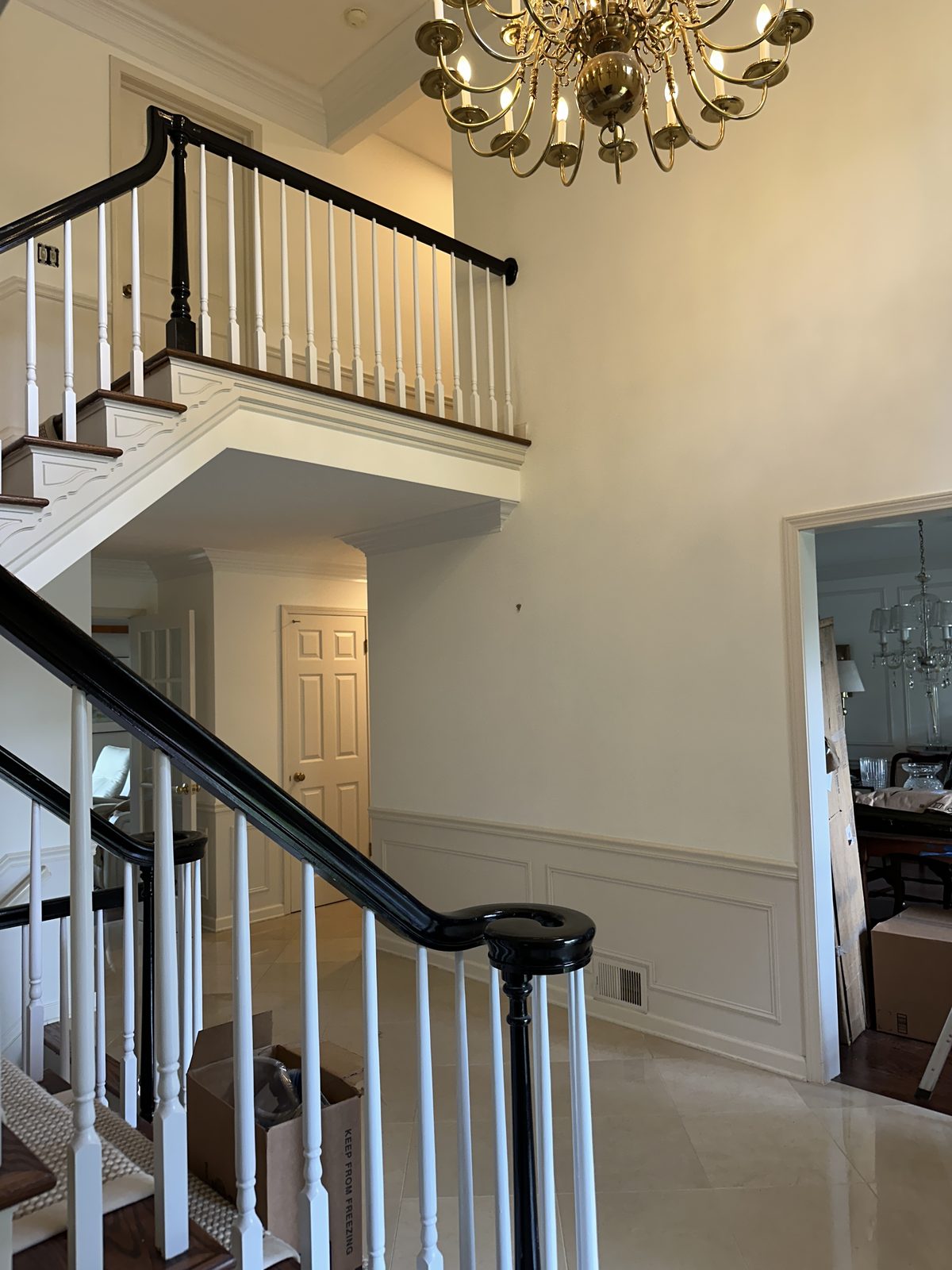
Guiffre’s Painting Co. paints and repairs the interiors of homes in Grosse Pointe Park, the southernmost of the five Pointes, bordering Detroit on the shore of Lake St. Clair. The Park mixes grand period-revival houses with older homes built close together, and inside, those two kinds of house need very different plans.
Bob Guiffre has painted homes across Grosse Pointe and Metro Detroit for more than 37 years, more than 1,800 of them, and his son, Bobby, works beside him on every project. We paint with Sherwin-Williams.
In a grand house the question is scale: high ceilings, a stair hall, formal rooms with layered moldings. In a close-set house it is space: smaller rooms, furniture with nowhere to go and walls that have been repainted many times. Many of both kinds have plaster walls, and plaster sets the prep.
What do the Park’s older interiors need?
If your house dates from the early 20th century, as so many in the Pointes do, expect plaster walls, original wood trim and, in larger homes, tall stair halls and formal rooms with layered moldings.
Old trim has typically been painted many times, and the lower layers are often oil-based. Latex over glossy oil, without sanding and a bonding primer, can peel off in strips. To check, rub a hidden spot with rubbing alcohol on a cotton ball: if paint comes off on the cotton, it’s latex; if not, it’s likely oil.
In a formal room, layered moldings and ornamental plaster collect decades of paint that fills in their detail. Cleaning them out, caulking the gaps and applying thin coats with a good brush brings the shadows back; our guide to painting crown molding and ornamental plaster shows how.
Scale changes the interior painting plan. In a grand house, a two-story stair hall needs staging rather than a stepladder, ceilings come first, and long runs of trim need the same sheen from one end to the other; see painting stair halls and high ceilings. In a smaller house, the limit is space to move furniture, so rooms are usually done one or two at a time.
Can cracked plaster in a Park house be repaired for good?
Often, yes, if the repair respects what the crack is. Plaster is durable, but it cracks as a house settles, usually above doors and windows and where walls meet ceilings. A lasting repair opens the crack, fills it with a setting-type compound (often reinforced with tape) and primes the patch so it doesn’t show through the finish. Caulk smeared over a plaster crack usually shows again.
Some cracks return with the seasons. Humid summers and dry, heated winters make a house move a little, and a crack that comes back in the same place is telling you something; see hairline cracks that keep coming back. A crack that is wide, keeps widening or comes with sagging may point to a bigger problem, so find the cause before painting.
Plaster that sounds hollow when tapped has often let go of the lath behind it and needs fastening first. For how repairs fit into a painting project, see our wall and plaster repair page and the guide to painting plaster walls.
Which colors suit Tudor Revival and English cottage interiors?
Tudor Revival and English cottage styles are among the period revivals found across the Pointes, and both tend to look right inside with earthy, restrained palettes. Their rooms can have dark woodwork, textured plaster or arched openings, so the wall color has to get along with all of it. Our guide to painting 1920s Tudor Revival interiors goes room by room.
- Inside a cottage-style house: Clary Sage SW 6178, a soft, muted sage green, in a study or breakfast room, against creamy trim.
- Tudor rooms with dark woodwork or beams: Greek Villa SW 7551, a warm, gently creamy white, on the walls can keep the room from feeling heavy while the wood stays the focus.
- Formal rooms with layered moldings: related warm whites on moldings and walls, such as Alabaster SW 7008, a warm, creamy off-white, let the profiles read through shadow rather than contrast.
Screens and paint chips mislead, so test a large sample on your own wall, in that room’s light, in the morning and in the evening with the lamps on. Plaster’s gentle waves catch light differently from flat drywall, so look at the sample from more than one angle. Our guide to historic interior paint colors for 1920s–1940s homes adds period context.
How should you plan painting the inside of a house in the Park?
The cold months suit interiors, since the outdoor season is short; our guide to when to paint inside in Michigan covers the seasons. Beyond that, plan for the kind of house you have.
For a large house, consider phasing. Interiors can be split by floor or by wing, with ceilings, walls and trim finished in each stretch. The tall stair hall is better done as one piece, so the long walls and trim match from the first floor to the second.
For a close-set house, the rooms are smaller and there is less space to shift furniture, so work usually goes a room or two at a time. That also keeps the rest of the house livable; see living at home during interior painting. Our process page shows how a project runs from walkthrough to final check.
What does a Park exterior need, big house or small?
Every exterior here faces wind and moisture off Lake St. Clair, humid summers and freeze–thaw cycles that pry open any joint left unsealed. A house near Windmill Pointe Drive takes more wind off the lake than one near the shops of Kercheval in the Park or Mack Avenue. Michigan’s exterior season runs roughly from late spring to early fall, so outside work books up early.
On a large home, the work is volume and height: long runs of trim, tall gables, dormers and, on some older houses, a slate or tile roof that can crack underfoot, so upper trim has to be reached without walking on it. Scraping, feathering, priming bare wood and recaulking that much trim is where the time goes. A large house can be phased, with the most weathered sides (often those facing the lake or the afternoon sun) one season and the rest the next, using the same color formula and sheen and ending each phase at a corner.
On a close-set house, the side walls are the hard part. A wall a few feet from the neighbor’s gets little sun, dries slowly after rain and is where mildew usually starts, so it needs a thorough wash, a mildew treatment and enough dry days before paint goes on. A narrow side yard also means careful ladder footing, and a word with the neighbors first, since a ladder may need to stand on their side of the line.
On Tudor Revival and English cottage exteriors the brick usually stays as it is, so choose paint to sit beside it: Urbane Bronze SW 7048, a warm bronze-brown dark neutral, on half-timbering, Greek Villa SW 7551 on stucco panels, and Rookwood Dark Green SW 2816, a dark traditional green from Sherwin-Williams’ historic Rookwood colors, on a heavy plank door or an arched entry.
Services
Painting services in Grosse Pointe Park.
Interior and exterior painting and wall & plaster repair, by Bob and Bobby Guiffre with Sherwin-Williams paint.
Interior painting
Walls, ceilings, trim and doors in Grosse Pointe Park — prepared properly and finished with clean, even lines.
Wall & plaster repair
Cracks, holes, loose plaster and tired old patches repaired properly — so the paint over them looks right.
Exterior painting
Siding, trim, windows and doors — prepared and painted to stand up to Michigan’s humid summers and freeze–thaw winters.
Guides
Reading for Grosse Pointe Park homeowners.
What Makes Painting a Grosse Pointe Interior Different
Plaster, layered woodwork, radiators and tall ceilings change almost every decision in an older Michigan interior. Here is what a careful job looks like, surface by surface.
Read the guidePainting stair halls and high ceilings: access, light and a consistent finish
Tall spaces are where interior painting is hardest to do safely and easiest to do unevenly. Here’s what a careful job involves, from the access plan to the final look in raking light, and why the stair hall is rarely a DIY project.
Read the guidePainting 1920s Tudor Revival Interiors: Plaster, Dark Woodwork and Arches
Tudor Revival rooms reward patience. The textured walls, arches and dark wood that give them character also make them unforgiving to rush.
Read the guideFAQ
Grosse Pointe Park questions.
Do you paint homes in Grosse Pointe Park?
Yes. Grosse Pointe Park is one of the areas Guiffre’s Painting Co. serves along Lake St. Clair, and we paint both interiors and exteriors there. Inside, large period-revival homes and smaller close-set houses each get a plan suited to their size and access.
Can a tall stair hall be painted while we live in the house?
Often, yes, with planning. A stair hall is the main way through a house, so the work needs a plan for a clear path and for stable access to the tall walls and ceiling, which takes more than a stepladder. Painting the hall in one stretch also keeps color and sheen even from the first floor to the second.
We have a small, close-set house. Do all the rooms have to be painted at once?
No. In a smaller house, space to move furniture is usually the limit, so rooms are often painted one or two at a time. That keeps the rest of the house usable, and ending each stretch at a doorway or inside corner keeps small differences in light from showing.
Painting in Grosse Pointe Park?
Tell us about your home in Grosse Pointe Park and we’ll be in touch to talk through the project and set a time to see it.