Color · 7 min read
Kitchen Wall Paint Colors: Choosing for White or Wood Cabinets, Stone Counters and Task Lighting
Kitchen walls have to flatter your cabinets and counters, stand up to grease and steam, and look right under strong task lighting. The color is only part of it.
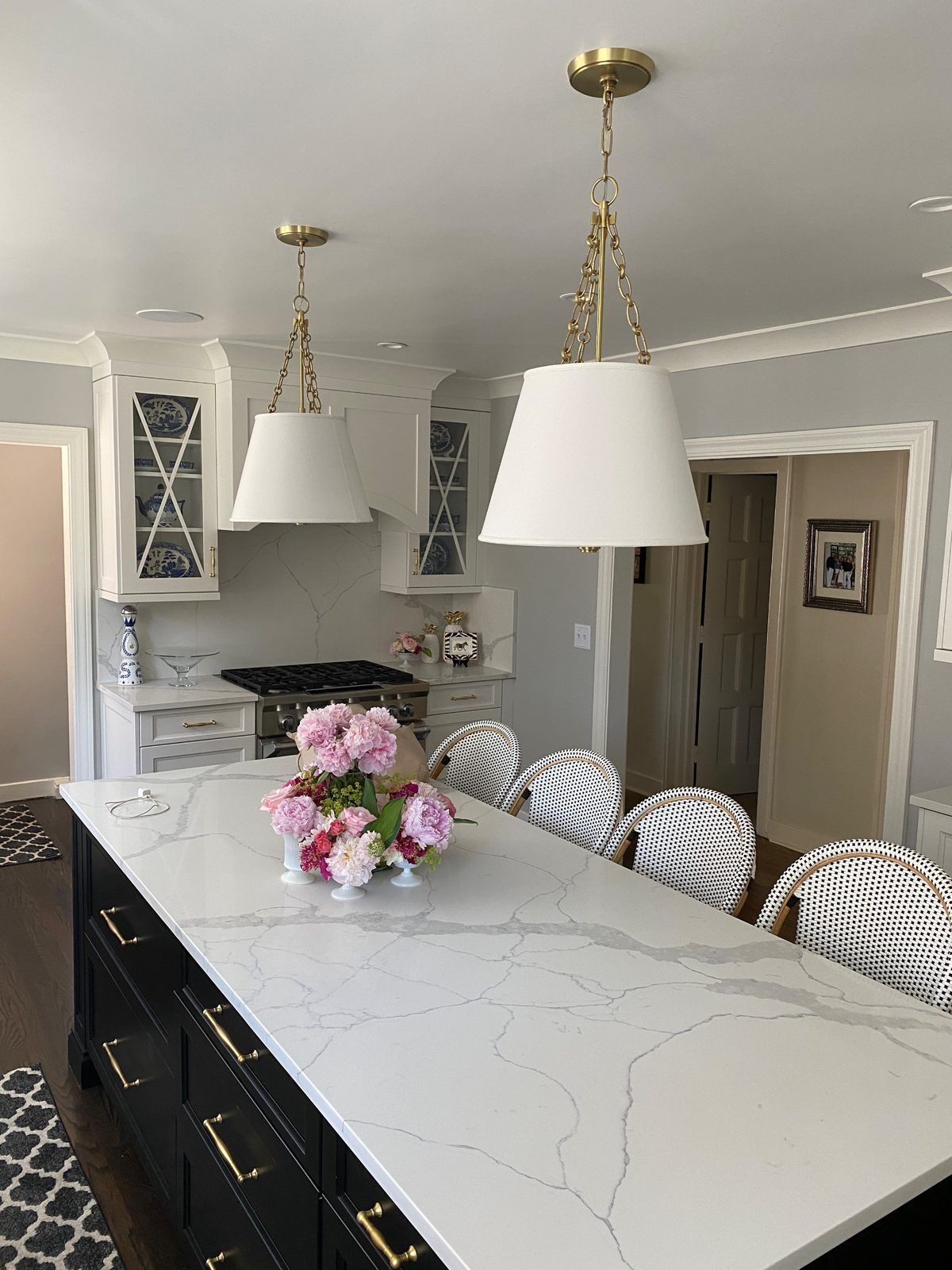
Most kitchens suit warm off-whites, soft greiges or muted sage on the walls, with gentle blue-grays an option beside white cabinets. Choose by holding samples beside the cabinets and counters. Use a washable sheen like satin, wash grease off the walls first, and test the color under your task lighting, not just in daylight.
Key takeaways
- Pick the wall color by holding it beside your cabinets and counters, since those are the fixed colors in the room.
- Warm off-whites and greiges suit most kitchens; white cabinets also take sage, blue-gray or, with good light, navy, while cooler grays need careful testing beside orange-toned wood.
- Satin or a similar washable finish is typical on kitchen walls, and grease must be washed off before painting.
- Test samples under the kitchen’s task lights as well as in daylight, because kitchen lighting is often stronger and cooler.
Sherwin-Williams colors in this guide
Jump to a section
- What is already fixed in a kitchen?
- Which wall colors suit white cabinets, and which suit wood?
- What about stone counters and backsplashes?
- What sheen is right for kitchen walls?
- How should I test kitchen colors under task lighting?
- What level of care do kitchen walls need?
- What if the kitchen opens into other rooms?
- Where do I start with a kitchen color?
- Questions
What is already fixed in a kitchen?
A kitchen has more permanent color than most rooms: cabinets, countertops, backsplash, flooring and appliances. The wall color has to sit comfortably with all of them. That is a different job from choosing a living room color, where furniture can change.
Start by naming the dominant color and undertone in the room. If the cabinets are white, is it a clean white or a creamy one? If they’re wood, is the wood honey, red or brown? Stone counters carry their own veining and tint, whether warm gray, white or cream.
The simplest way to judge compatibility is to hold your sample board directly next to a cabinet door and a counter piece and see which colors look calm beside them. This guide is about the walls, not the cabinets.
Which wall colors suit white cabinets, and which suit wood?
White cabinets
A white kitchen gives you the most freedom, with one catch: the white itself has an undertone. A clean white often looks crisper beside a slightly warm wall, while a creamy white can turn yellow beside a cool gray wall. Some Sherwin-Williams options:
- Agreeable Gray SW 7029, a light warm gray that reads as greige, neutral enough to let cabinets and backsplash lead.
- Sea Salt SW 6204, a pale green-gray that can read soft blue or green depending on light; calm and clean beside white.
- Upward SW 6239, a soft, airy blue-gray that keeps a kitchen feeling light.
- Clary Sage SW 6178, a soft, muted sage green that adds color without being loud.
- Naval SW 6244, a deep navy for a bolder wall or an island backdrop, in a kitchen with good light.
Wood cabinets
Wood adds warmth to a kitchen, whether it is in the cabinets, the floor or the original wood trim that is common in older Grosse Pointe and Metro Detroit homes. Warm wood tends to suit soft, warm walls that echo it without matching it.
Accessible Beige SW 7036, a warm greige that leans more beige, sits well with honey and medium wood. Shoji White SW 7042, a soft off-white with a greige cast, lightens a kitchen with darker wood. Evergreen Fog SW 9130, a gray-green sage, looks good with warm brown wood and brings some depth.
Cooler grays can fight orange-toned wood, so test them carefully. Repose Gray SW 7015 reads cooler than Agreeable Gray and can lean slightly blue or violet in cool light.
What about stone counters and backsplashes?
Stone counters and tile backsplashes have undertones that are easy to miss until you place them beside a paint color. A warm cream granite can make a cool gray wall look stark. A cool white quartz can make a creamy wall look yellowish. Take a piece of your counter sample or tile and hold it right beside your paint sample, in the same light.
If the counter or backsplash is busy, keep the wall quieter. If it’s plain, the wall can carry more color.
What sheen is right for kitchen walls?
Kitchen walls take splatter, steam and wiping, so a washable sheen matters. Satin is a common choice on the walls, with satin or semi-gloss on trim and doors. Higher sheen is more washable but shows more flaws.
Plaster walls are common in older Grosse Pointe and Metro Detroit homes and are often gently wavy, so on uneven plaster eggshell or a low satin is a compromise. Many labels list washable matte options too, so check the can for scrub ratings.
The ceiling is usually flat, but in kitchens with heavy cooking some owners choose a washable ceiling finish. Our kitchens and bathrooms paint guide covers the choices.
Wiping is the real test of a kitchen finish, and fresh paint is softer than it feels. Many labels recommend waiting for the paint to cure before heavy scrubbing, and that takes weeks, so be gentle in the meantime. On a humid summer day near Lake St. Clair, drying can run slower, so follow the label’s recoat time and allow extra. See paint dry time vs cure time for details.
Painting rooms like this in Grosse Pointe?
Tell us about your home and we’ll be in touch to talk it through.
How should I test kitchen colors under task lighting?
Kitchens are often lit by stronger, cooler bulbs than other rooms, plus under-cabinet lights. Those lights change how a wall reads. Cool, bright LEDs can make a warm color look flatter or a gray look bluer.
Paint large samples on two walls, one near the window and one near the stove or sink (wash and rinse that spot and let it dry first, or paint the samples on a board you can move), and check them in morning light, midday and evening with every light on, including the under-cabinet ones. Compare them to the cabinets in each condition. If you’re deciding between two colors, the one that looks better at night with the task lights usually wins, since a kitchen is often busiest in the evening. Our guide to bulbs and lighting explains why colors move.
What level of care do kitchen walls need?
Kitchens punish shortcuts. A few checkable details separate a careful job from a rushed one:
- Floors, counters, appliances and plants are protected, and small items are moved out rather than taped around.
- The power is switched off at the breaker before anyone washes near outlets, switches or fixtures. Outlet and switch covers are removed instead of painted around, and the devices themselves are kept free of paint.
- Walls are washed with a degreasing cleaner, following the label, rinsed with clean water and left to dry, especially behind and above the stove and around the sink.
- Holes and dents are filled and sanded smooth.
- Gaps where the wall meets cabinets, trim or the backsplash are caulked with a paintable caulk. Check the label, because many silicone caulks can’t be painted over.
- Patches are primed, and stains from water, smoke or grease are sealed with a stain-blocking primer once the cause is fixed and the area is dry. Check the label for the right one.
Grease that is only painted over can come back as beaded or peeling paint, which is why the washing step comes first. When it is skipped, the signs are patches that look oily, paint that pulls away in sheets and edges that lift near the stove and sink.
That follows the same steps as our process: protect, clean, scrape, sand, fill, caulk and prime where needed, then even coats of Sherwin-Williams paint, with a final walkthrough and touch-ups.
If the house was built before 1978
Whoever does the work, homes built before 1978 may contain lead-based paint, and scraping, sanding or scuffing old paint on kitchen walls and trim can create hazardous dust. Don’t dry-scrape or dry-sand paint that hasn’t been tested. Cleanup matters too: the usual advice is to wet-wipe surfaces and use a HEPA-filter vacuum, not dry sweeping or an ordinary household vacuum, which can blow fine dust back into the air. The EPA’s Renovation, Repair and Painting (RRP) rule requires any firm paid to do that work in a pre-1978 home to be certified and to use lead-safe practices, generally when more than 6 square feet of painted surface per room inside is disturbed; see the EPA’s Renovation, Repair and Painting program page. Older plaster and joint compound can also contain asbestos, so have suspect material tested before sanding or scraping it. If a test is positive, leave the material undisturbed and ask a qualified asbestos professional whether it should be left alone, sealed (encapsulated) or removed. Don’t scrape, sand, roll or spray it yourself.
For tips on cleaning painted walls afterward, see how to clean painted walls.
What if the kitchen opens into other rooms?
Some post-war and updated older homes have kitchens that open into a breakfast nook, family room or hallway. In that case the wall color is seen with the neighboring room, and it helps to treat them as one palette. Using the same color across the opening keeps the sight lines calm, and where a wall runs continuously from the kitchen into the next room, the sheen should stay the same too, because a change partway along a wall can read as a patch.
Change sheen only at a clear break, such as an inside corner or a trim line. If you prefer different colors, choose two that share an undertone so the change at the doorway looks deliberate.
Check any window or door trim that is visible from both rooms, because the trim color and sheen should stay the same on both sides. A mismatch there is one of the first things the eye catches. If the kitchen opens to an eating area used mostly in the evening, our dining room paint colors guide covers evening light and how trim contrast changes a wall color.
Where do I start with a kitchen color?
Choose between three paths: a quiet neutral that lets the cabinets lead, a soft color like sage or blue-gray that adds life, or a deeper color for contrast. Whichever you pick, test it beside your actual cabinets and counters, using the method in our guide to testing paint samples at home. When you are ready to plan the project, our interior painting page covers the service.
Questions
What wall color goes with white kitchen cabinets?
White cabinets pair with many colors, including warm greige such as Agreeable Gray SW 7029, pale green-gray such as Sea Salt SW 6204, or soft blue-gray such as Upward SW 6239. Hold your sample beside a cabinet door to check the undertone. Test it under your kitchen’s task lighting too.
Should kitchen walls be satin or eggshell?
Satin is a common choice because it wipes clean, with satin or semi-gloss on trim. Higher sheens show more wall flaws, so on uneven plaster a lower satin or eggshell may be a better compromise. Wait for the paint to cure before scrubbing.
Do I need to clean kitchen walls before painting?
Yes. Grease and cooking film keep paint from bonding and can cause peeling or beading. Wash walls with a degreasing cleaner, rinse well and let them dry before any primer or paint goes on. Switch the power off at the breaker before washing near outlets, switches or fixtures.
About the author
Guiffre's Painting Co.
Family-owned interior painting and plaster repair serving Grosse Pointe and Metro Detroit. Owner Bob Guiffre has been painting for more than 37 years — more than 1,800 homes — and his son, Bobby, works beside him on every project. We paint with Sherwin-Williams. Estimates are free. Insured: $1,000,000 general liability. Call (586) 722-3277.