Interior · 7 min read
Painting a Bathroom: How to Handle Moisture and Mildew So the Paint Lasts
Bathroom paint fails for predictable reasons: steam, soap film and mildew that was painted over instead of cleaned. Here is the careful way to do it.
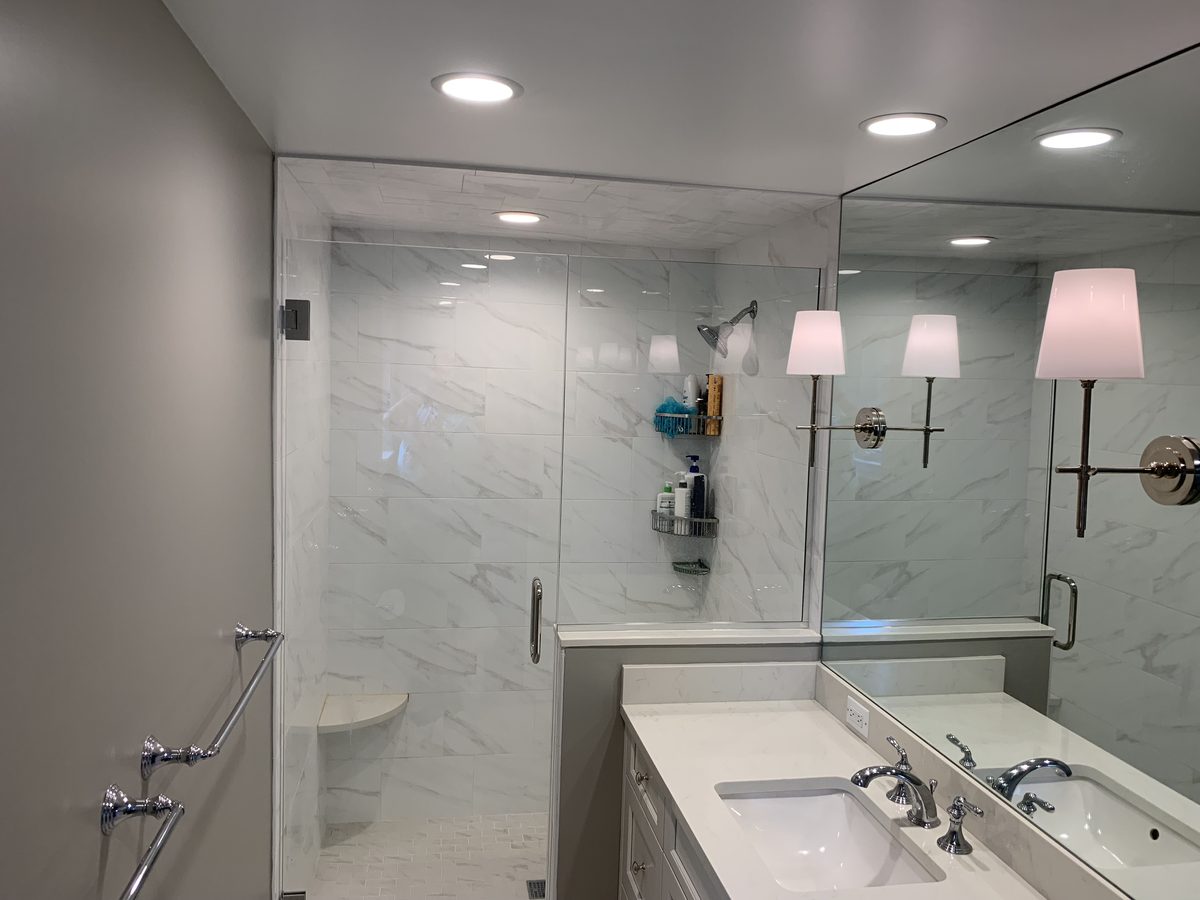
To paint a bathroom that lasts, clean off soap film and mildew, repair damaged areas, caulk joints, and spot-prime before painting. Use a satin or semi-gloss paint suited to humid rooms, run the exhaust fan, and wait for the paint to cure before long hot showers.
Key takeaways
- Mildew is cleaned and the moisture source fixed; painting over it often hides it only briefly.
- Soap film and hair-product residue cause peeling and fisheyes, so wash the walls and ceiling before sanding or priming.
- Satin or semi-gloss in a paint labeled for bathrooms, with fresh caulk at the tub and trim, is a durable, wipeable combination.
- Keep the fan running and wait out the cure before long hot showers or scrubbing.
Sherwin-Williams colors in this guide
Jump to a section
Why does bathroom paint fail so often?
A bathroom is a small room with some of the harshest conditions in the house: steam, splashes, heat, soap film and little air movement. Paint in that room usually fails for one of three reasons, and none of them is about color or brand.
- Residue left on the wall. Soap scum, hair spray and body oils form an invisible film. Paint will not bond to it, and it can cause beading called fisheyes.
- Mildew painted over. Spores survive under the film, grow through it, and show up again as dark spots, sometimes within weeks.
- Moisture that never leaves. Without ventilation, steam condenses on the ceiling and the coolest walls, then softens the paint.
Around Metro Detroit, humid summers off Lake St. Clair make this worse, and in winter a cold exterior wall in a heated bathroom collects condensation.
Is it mildew or just dirt?
Mildew usually shows as black, gray or green speckling, most often on the ceiling, in corners, above the shower and along the caulk line. A common check is to dab a dark speck with a little diluted household bleach: mildew usually lightens within a few minutes, while plain dirt does not. Bleach can also lighten some paints, so first try it on a small, inconspicuous painted patch. Ventilate, wear gloves and eye protection, follow the label on any cleaner you choose, and never mix bleach with ammonia or acid-based cleaners. Switch the circuit off at the breaker before washing near the fan, light fixtures, switches or outlets, and keep water out of them.
The cleaning approach is the important part:
- Cut out blackened or failing caulk first, since mildew often grows into it. The caulk section below covers removal and what goes back in.
- Wash the area with a cleaner made to remove mildew, scrubbing gently so the surface is not damaged.
- Rinse well and let the wall dry fully, which can take longer than expected.
- Look again. If mildew returns quickly, moisture is still the cause.
The rule is simple: clean first, then coat. EPA’s guide to mold, moisture and your home says to clean up mold and dry the surface before painting, because paint applied over moldy surfaces is likely to peel, and that mold will most likely come back if the water problem isn’t fixed. Mildew-resistant paint helps on a clean, dry wall; it does not cure a wet one. Mold that covers a large area, or that has soaked into wet drywall, is a remediation question, not a painting one.
Is the fan good enough to protect new paint?
A working exhaust fan that vents outdoors is one of the most useful things for bathroom paint. A fan that rattles, barely pulls tissue to the grille, or vents into the attic is not doing its job.
- Run the fan during every shower and afterward. Common advice is about twenty minutes after a shower; follow the fan’s instructions.
- Crack the door after showering so moist air can leave.
- Replacement or ducting work is a job for an electrician or ventilation contractor, not a painter.
If the room has no fan, a window that opens helps, but ask a qualified tradesperson about the right fix. Painting does not replace ventilation.
How do you prep walls, ceiling and trim?
The sequence follows why prep is the paint job, with a few bathroom-specific checks.
- Power off, then hardware. With the circuit switched off at the breaker, take off the fan grille, switch plates and towel bars, or mask them tightly.
- Degrease and de-film. Cut out old or blackened caulk first, then wash with a mild degreasing cleaner, rinse, and let it dry. Soap film is a common hidden culprit.
- Scrape loose paint. Peeling often starts near the shower and the ceiling. Homes built before 1978 may have lead-based paint, and scraping, sanding or scuff-sanding it can create lead dust. The EPA’s Renovation, Repair and Painting rule requires certified firms and lead-safe work practices for paid work that generally disturbs more than 6 square feet of painted surface per room inside, so read it before you scrape or sand. For cleanup in an older house, wet-wipe and use a HEPA-filter vacuum rather than an ordinary household vacuum or dry sweeping, which can spread fine dust.
- Check the wall itself. Soft, swollen or crumbling drywall near the tub means water got in. Damaged board needs repair or replacement before any paint goes on. Plaster, which is common in older Grosse Pointe homes, can loosen in steamy rooms, so tap for hollow spots and see our guide to loose plaster repair.
- Fill and sand. Patch holes from old towel bars and hooks, then sand the patch and the edges of flaking paint smooth, keeping the lead caution above in mind.
- Caulk the joints. After washing, patching and sanding, put in new caulk before priming, and let it cure as its label says. The next section covers what goes where.
- Prime patches and stains. Once everything is dry, prime. Bare spots flash if unprimed. A stain-blocking primer handles water stains. For mildew-prone spots, clean first, then look for a primer or paint whose label addresses mildew. Our explainer on stain-blocking primers shows how to choose.
The ceiling takes a lot of steam
The ceiling often shows the first failure: freckles of mildew, yellowing, or paint peeling in curls.
- Wash it like the walls, with the power off, the room ventilated and your eyes protected.
- Scrape only what is truly loose, then sand the edges so they do not ridge through the new paint. The lead caution above applies overhead too, and in an older home a textured or plaster ceiling may contain asbestos. EPA’s homeowner asbestos guidance says not to saw, sand or scrape suspect material, and that a trained, accredited professional should take any samples. If a result is positive, leave it undisturbed and ask that professional whether to leave it in place, seal it or remove it. Do not scrape, sand, roll or spray it yourself.
- Prime stains and bare patches, since ceiling water marks bleed through ordinary paint.
- If a stain keeps returning, ask a roofer, plumber or fan installer to check the source. It can come from a roof, pipe or fan duct, which is a repair question before it is a paint question.
Our ceiling painting guide covers technique, including keeping a wet edge.
Painting rooms like this in Grosse Pointe?
Tell us about your home and we’ll be in touch to talk it through.
What caulk goes where?
Caulk is half the bathroom. The line between wall and tub, vanity backsplash, window trim and baseboard tops all open up over time. The order matters: old caulk comes out before the mildew wash, and new caulk goes in after washing, patching and sanding, before priming.
- At the tub or shower, use a caulk made for kitchens and baths, which stays flexible and resists mildew. Many of these are not paintable, so check the label before deciding whether to paint over it.
- On trim, baseboards and casings, use a flexible paintable caulk. Caulk the top of baseboards, not the gap at the floor.
- Remove old, cracked or blackened caulk fully before applying new, and before washing. New caulk over old simply fails the same way.
Let caulk cure as the label directs before it gets wet or painted. Our guide to sanding and caulking trim covers technique.
Which sheen and color should a bathroom have?
Higher sheen wipes clean and sheds moisture better, but it also shows flaws. Satin works on most bathroom walls and semi-gloss on trim and doors. Ceilings are often flat, though some people choose a ceiling paint labeled for baths where steam is heavy; check the label. Our kitchen and bathroom paint guide and sheen guide explain the trade-offs.
For color, small rooms with a mirror and a vanity light behave differently from a bedroom. Sea Salt SW 6204 and Upward SW 6239 are soft, airy options, Pure White SW 7005 keeps a windowless bathroom looking clean, and Indigo Batik SW 7602 works as a bolder accent wall. Chips and screens mislead, and tile and fixtures change how a color reads, so test a large sample next to the actual tile, with the actual bulbs.
What do careless bathroom jobs skip?
A short checklist separates a bathroom that lasts a month from one that lasts years.
- Washing the walls, because they look clean.
- Removing old caulk instead of caulking over it.
- Priming patches, water stains and the area behind the toilet and above the tub.
- Sealing the top and bottom edges of the bathroom door with paint, where steam gets in and swells bare wood.
- Waiting between coats as the can says, since a humid bathroom slows drying.
When can you shower after painting?
Paint may feel dry to the touch in hours, but it cures over weeks. Heavy steam and scrubbing in the first days can soften or mark a fresh film. Check the can for guidance, and read our dry time versus cure time guide.
- Run the fan during and after any use of the room.
- Keep first showers short and cooler if you can, and avoid wiping the walls for a while.
- Do not stick up hooks, decals or tape on fresh paint.
If you would rather hand the job off, Guiffre’s Painting Co. does interior painting. Floors and furniture are protected, surfaces are cleaned, loose paint is scraped, holes and cracks are filled, joints are caulked, and bare or stained areas are primed. Sherwin-Williams paint goes on in even coats, Bob and Bobby are on every project, and the job ends with a walkthrough and touch-ups.
Questions
Can I just paint over bathroom mildew?
No. Spores survive under the paint and grow through it, often within weeks. Clean the area, rinse, let it dry completely, and fix the moisture source before priming and painting.
What sheen should a bathroom have?
Satin is a common choice for walls and semi-gloss for trim, because both wipe clean and handle moisture better than flat. Higher sheen shows more imperfections, so good prep matters even more. Check the product label for bath suitability.
How long should I wait to shower after painting?
Paint may feel dry in hours, but it keeps curing for weeks. Run the fan, keep early showers short, and avoid scrubbing the walls. Follow the cure guidance on the can.
About the author
Guiffre's Painting Co.
Family-owned interior painting and plaster repair serving Grosse Pointe and Metro Detroit. Owner Bob Guiffre has been painting for more than 37 years — more than 1,800 homes — and his son, Bobby, works beside him on every project. We paint with Sherwin-Williams. Estimates are free. Insured: $1,000,000 general liability. Call (586) 722-3277.