Interior · 7 min read
Painting a Basement in Michigan: Deal With Moisture Before You Open the Paint
A basement paint job lasts only as long as the wall stays dry. Here is how to check, what to fix first, and how to prep concrete, block and finished drywall so the paint holds.
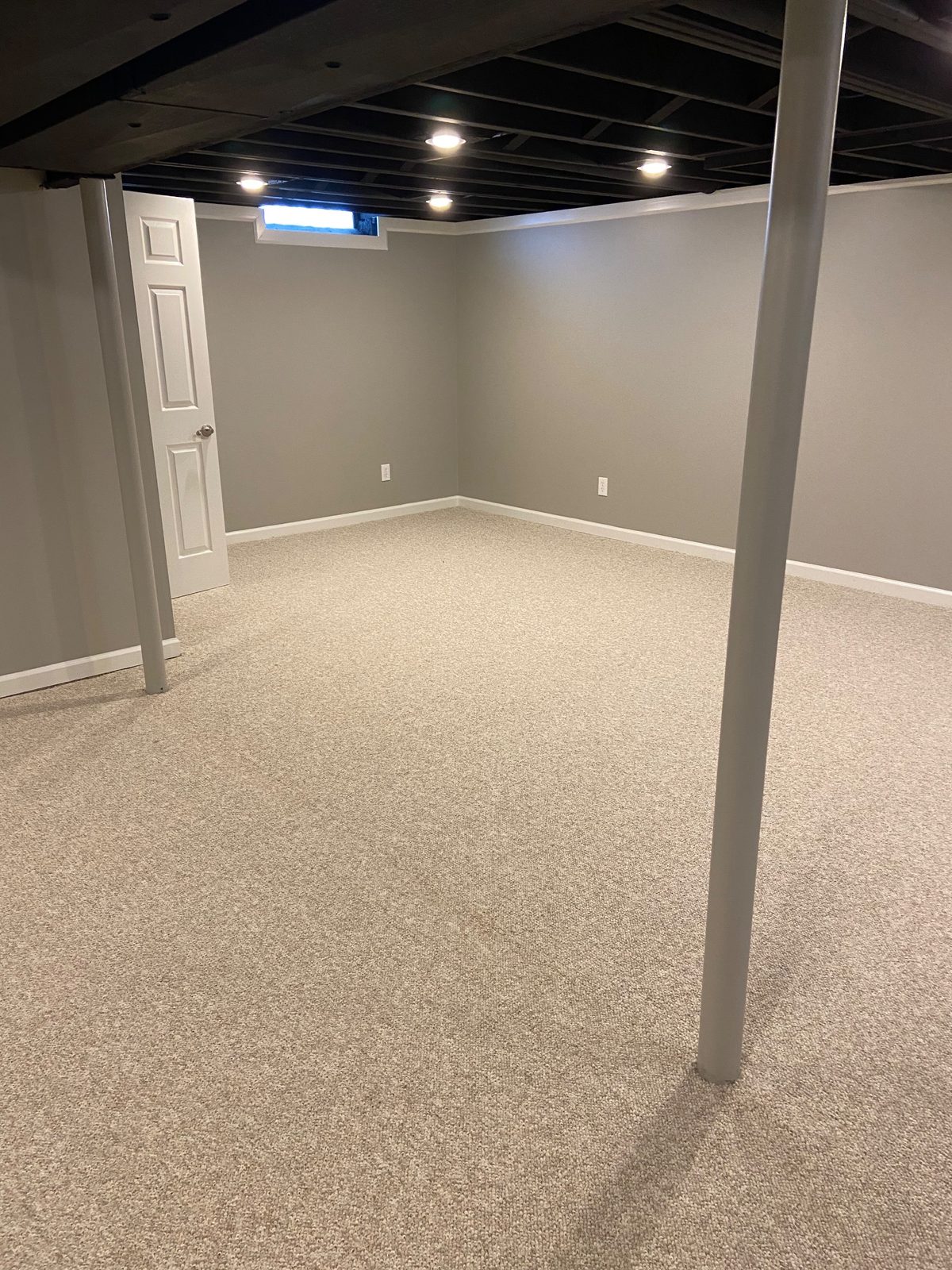
Paint a basement only after the walls are dry and the source of any moisture has been fixed. Then clean the surface, patch cracks, prime bare masonry or drywall, and apply finish coats, usually two, with a product made for that surface. Paint is not a reliable fix for water that is still coming through the wall.
Key takeaways
- Find and fix the moisture source first; paint is a finish, not a waterproofing system.
- Brush off white efflorescence, clean the wall, and treat its return as a sign that water is still getting in.
- Bare concrete and block need cleaning, patching and the right primer, while finished drywall is prepped like any other room.
- Run a dehumidifier, keep air moving, and give the paint time to cure before shelving, storage or heavy use.
Sherwin-Williams colors in this guide
Jump to a section
- Can you paint basement walls at all?
- How do you know if a basement wall is too damp to paint?
- What is the white powder on my basement wall?
- Does masonry or waterproofing paint stop leaks?
- How do you prep bare concrete or block?
- How is a finished basement different?
- Which paint, sheen and color work in a basement?
- How long should you wait before moving things back?
- Questions
Can you paint basement walls at all?
Yes, and a painted basement is easier to keep clean and brighter to live in. The catch is that concrete, block and the soil behind them hold and move water, and the wall is often cooler than the room air.
In Metro Detroit, humid summers off Lake St. Clair give way to cold, dry heated air in winter. Warm, damp summer air meeting a cool basement wall can leave it clammy, so a room that was fine in January can feel damp in July. That is often condensation rather than a leak; the test below helps tell them apart.
How do you know if a basement wall is too damp to paint?
- The plastic-sheet test. Tape a square of clear plastic, about two feet across, tightly to the wall on all four sides and leave it for a day or two, then repeat after a heavy rain. Moisture on the wall side of the plastic means water is moving through the masonry. Moisture on the room side means the air is humid.
- Look at the lower wall. Dark bands, a damp feel, flaking paint or white crust near the floor are clues, especially in corners and where wall meets floor.
- Look outside the wall. Downspouts that dump next to the foundation, soil that slopes toward the house and clogged gutters are common causes of wet basement walls.
If the wall fails any of these checks, stop. The next step is a grading, gutter, crack-repair or drainage fix, work for the right trade, not a painter. Paint comes last, once the wall stays dry through a wet spell.
What is the white powder on my basement wall?
That crust is usually efflorescence: mineral salts left behind when water moves through masonry and evaporates at the surface. It is a sign of water, not a stain to cover.
The careful sequence:
- Dry-brush the salts off with a stiff nylon or wire brush. Wear eye protection and a dust mask. If the wall also carries old paint in a pre-1978 house, read the lead caution under prep below before you brush.
- Wash the area with plain water or a cleaner made for efflorescence. Some are acidic, so follow the label for gloves, eye protection and rinsing. Switch off the circuit at the breaker before washing near outlets, switches or fixtures, and keep water out of them, unless that circuit also runs a sump pump, freezer or dehumidifier (leave those running, keep water well away from their outlets, and ask an electrician if unsure). Let the wall dry fully.
- Watch it for a few weeks. If the powder returns, water is still getting in.
Does masonry or waterproofing paint stop leaks?
Not reliably. Some masonry coatings resist dampness or water vapor and can help on a dry, porous wall, but waterproofer claims vary, and many labels cover damp walls rather than active leaks. Read the can for its limits, and do not count on any coating for a wall that leaks, seeps after rain or sits against saturated soil.
A coating cannot hold back the water pressure a drainage problem creates. When one traps moisture, it blisters and peels, and the failed film has to come off first.
Painting rooms like this in Grosse Pointe?
Tell us about your home and we’ll be in touch to talk it through.
How do you prep bare concrete or block?
Prep decides the result, as our guide on why prep is the paint job explains. For bare masonry, the careful sequence is:
- Remove loose and failing material. Scrape and brush off flaking old paint, dirt and cobwebs. Homes built before 1978 may have lead-based paint, and scraping, wire-brushing, sanding or scuff-sanding it can create lead dust. The EPA’s Renovation, Repair and Painting rule requires certified firms and lead-safe work practices for paid work that generally disturbs more than 6 square feet of painted surface per room inside. For cleanup in an older house, wet-wipe and use a HEPA-filter vacuum rather than an ordinary household vacuum or dry sweeping, which can spread fine dust.
- Clean it. Dust, oil drips, laundry soap residue and old sealers stop paint from bonding. Wash with a masonry-suited cleaner (with the same power-off rule as above), rinse, and let the wall dry completely.
- Patch it. Fill small cracks and holes with a patching product made for masonry. Cracks that open and close or leak need a repair, not a fill. Let patches cure and dry before priming.
- Prime it. Use a primer or block filler made for masonry. Masonry is alkaline, so look for a label that says it suits masonry or resists alkali. A filler-type primer closes the pitted face of block so the finish coats look even.
- Plan the floor edge. A painted slab is a separate product with its own prep, so check the label; do the walls first so drips land on bare floor.
How is a finished basement different?
A finished basement has framed walls, drywall, trim, and sometimes a ceiling grid or painted joists. Once the moisture is under control, a finished wall is prepped like any other room: wash and dry, patch, sand, spot-prime, then paint.
The details worth checking:
- The bottom edge of the drywall. Staining, softness or swelling near the floor usually means the wall has been wet, though a pipe or HVAC drip can too. Damaged drywall is repaired or replaced before painting, not covered. Widespread or recurring mold is a remediation question, not a painting one.
- Baseboards and door casings. They often show moisture first. Check for swollen, soft or stained wood, and caulk the top of the baseboard, not the gap at the floor.
- Bare or patched drywall. New patches need drywall primer or the patch will show through as a dull “flashed” spot. Our guide on when primer is needed covers the cases.
- Old stains. Water rings show through ordinary paint. Fix the leak first, then use a stain-blocking primer (shellac- and oil-based forms are common but their vapors are flammable: ventilate, keep sparks and flames away, never use them near a lit furnace or water heater, and read the label). See our explainer on stain-blocking primers.
- Mildew. Speckled or fuzzy growth is cleaned, not painted over: EPA’s guide to mold, moisture and your home says to clean up mold and dry the surface before painting, and that mold will most likely come back if the water problem isn’t fixed. Our bathroom moisture and mildew guide walks through the cleaning steps.
In older Grosse Pointe homes, a basement finished decades ago may have paneling (see painting knotty pine and wood paneling), plaster or early drywall, and painting over old finishes calls for the same care as upstairs: clean, scuff, bond, then coat, with the lead caution above covering the scuffing. In houses of that age, textured ceilings, old joint compound, some plasters and old pipe or duct wrap may contain asbestos. EPA’s homeowner asbestos guidance says undamaged material you won’t disturb should be left alone, that you may want a trained, accredited professional to inspect before a remodel, that a professional should take any samples, and that you should not saw, sand, scrape or drill into suspect material. If a result is positive, ask that professional whether to leave it in place, seal it or remove it, and do not scrape, sand, roll or spray it yourself.
Which paint, sheen and color work in a basement?
Choose a paint made for the surface and, where needed, labeled for damp-prone or high-humidity rooms. A washable, mildew-resistant finish helps, though no label replaces a dry wall.
For sheen, satin or eggshell works on most basement walls. Lower sheen hides the waves of old block and patched concrete; higher sheen shows every flaw. Our sheen guide explains the trade-offs.
Basements often have small windows and mostly artificial light, so colors read differently. A pale warm neutral such as Alabaster SW 7008 or Greek Villa SW 7551 tends to brighten a low-light room, while a greige like Agreeable Gray SW 7029 keeps a family room calm. Screens and paint chips mislead, so test a large sample on the actual wall under the lights you will really use.
How long should you wait before moving things back?
Paint feels dry to the touch in hours but cures over weeks, so check the can for recoat times and treat the wall gently. Our guide to dry time versus cure time explains why.
After painting, a few habits protect the finish:
- Run a dehumidifier through the humid months; the same EPA guide suggests keeping indoor humidity below 60 percent, ideally 30 to 50.
- Keep furniture and shelving a few inches off the wall for air flow.
- After the first heavy rain, watch for new dampness, bubbling or white powder.
If you hire a painter, ask for the same prep as the rest of the house in the written scope. Guiffre’s Painting Co. approaches interior painting this way: floors and furniture are protected, surfaces are cleaned, loose paint is scraped, holes and cracks are filled, joints are caulked, and bare or stained areas are primed. Sherwin-Williams paint goes on in even coats, and Bob and Bobby are on every project.
Questions
Can I paint over a damp basement wall?
No. Paint will not hold on a wall that is still taking on moisture, and it can blister or peel off in sheets. Find the source first, such as grading, gutters or cracks, let the wall dry, and then prep and paint.
What do I do about white powder on basement walls?
That is usually efflorescence, which is mineral salt left behind by moving water. Brush it off, wash and dry the wall, and watch whether it returns. If it does, water is still coming through and the cause needs fixing before paint.
Is masonry paint the same as waterproofing?
Not necessarily. Some masonry coatings resist dampness or vapor on a dry wall, but they do not fix a leak or active seepage. Always read the label for what the product is, and is not, designed to do.
About the author
Guiffre's Painting Co.
Family-owned interior painting and plaster repair serving Grosse Pointe and Metro Detroit. Owner Bob Guiffre has been painting for more than 37 years — more than 1,800 homes — and his son, Bobby, works beside him on every project. We paint with Sherwin-Williams. Estimates are free. Insured: $1,000,000 general liability. Call (586) 722-3277.